No overtourism. Zero tour-bus selfie sticks. Just ancient cedars and mountain temples up north, sand dunes and coral reefs down south, and a Tokyo that feels like a village.
Let’s be honest: we’ve all seen the same Japan. The Fushimi Inari gates at 11 a.m., shoulder to shoulder with a few thousand fellow pilgrims. Shibuya Crossing, filmed from every angle by every visitor. Kyoto’s Gion district, where the hunt for a geisha has turned into a sport. Everyone ticks off the same ten spots, posts the same ten photos, and queues for the same ten ramen shops.
It’s no surprise Japan is struggling under its own popularity. Famous temples are packed, small towns are feeling the squeeze, and locals are increasingly fed up with visitors who only come for the photo. And the sad part is that the country’s greatest treasures are rarely the ones with the longest lines.
Because Japan is far bigger, wilder, and weirder than the classic route suggests. It has a staircase of 2,446 steps through a thousand-year-old cedar forest. A town with 91 ramen restaurants for 46,000 residents. A temple where you sleep next to a forest cemetery. A dune landscape where camels trudge through the sand. And a corner of Tokyo where you’ll end up eating sashimi at a stranger’s kitchen table.
These tips lead you away from the postcard and toward the real thing. Fewer crowds, more stories, and a trip that will still feel like yours when you get home.
Ready to leave the beaten path and discover 13 hidden gems in Japan? Let’s go.

1. Dewa Sanzan, Tohoku: Mountain Monks and Japan’s Longest Staircase
Meet Shugendo, a mash-up of Buddhism, Shamanism, Shintoism, and Taoism. Its spiritual heart is the “Three Mountains of Dewa”: Haguro-san, Gassan, and Yudono-san, linked by the “Journey of Rebirth,” a pilgrimage route that follows the Yamabushi, Japan’s mountain monks.
Behind the Koganedo Hall of Shozen-in Temple, the challenge begins: 2,446 steps, the longest staircase in Japan, lined with hundreds of towering ancient cedars. A few steps from the five-story pagoda Gojunoto stands the 1,000-year-old “Grandpa Cedar,” Jiji-sugi.

On the way down, pilgrims in white Yamabushi robes glide past. After four hours and 4,892 steps, we’re back at Koganedo, legs wobbling, spirits high. Haguro-san stands for birth and the present, while 1,948-meter Gassan stands for death. Its six-kilometer trail and 600 meters of elevation gain will test your stamina.
The finale is Yudono-san at 1,500 meters, the mountain of rebirth. The pilgrims’ goal isn’t a shrine but the sacred rock Goshintai, where thermal water flows straight from the earth. That same water fills the wooden onsen of the “Sanrojo Mountain Lodge” at the foot of the mountain. A night in a big tatami room, with shared bath, Shojin Ryori dinner, and onsen access, runs about 75 euros. Authentic doesn’t get more affordable.
Approx. 480 km from Tokyo

2. Kitakata, Fukushima: Japan’s Ramen Capital
Ninety-one ramen restaurants for 46,000 residents. That’s not a food scene, that’s a lifestyle. Kitakata Ramen ranks among Japan’s three great ramen styles, alongside Sapporo (Hokkaido) and Hakata (Fukuoka).
Its signature: flat, wide, wavy noodles in a broth of pork marrow bones and dried baby anchovies, topped with a slice of Narutomaki, the red-and-white spiral fish cake. Local lore says it all started in 1927, when Chinese-born Ban Kinsei opened “Genraiken.” The place still serves thick, chewy Chuka Soba egg noodles in soy sauce (shoyu) broth.
One rule for every bowl of ramen: slurp like you mean it! Pulling in air with your noodles sends the aroma straight to your olfactory cells and cranks up the flavor.
Approx. 230 km from Tokyo

3. Ouchi-juku, Fukushima: Nostalgia Under Thatch
Tucked into the mountains of Fukushima, Ouchi-juku looks like a storybook come to life. Thatched-roof houses, some 300 years old, line the main street, which ends at the charming Takakura Shrine and a gorgeous view over the village.
The “Misawaya” inn is famous for Negi Soba, eaten with a whole green onion instead of chopsticks. Good luck, rookies! Six kilometers on, you’ll find Japan’s only thatched-roof train station with its own hot foot bath: Yunokami Onsen Station, on the Aizu Railway, whose trains are decorated with cat cartoon characters.
Another 15 kilometers north, in Aizu-Wakamatsu, stands Sazae-do Temple, Japan’s only double-helix wooden structure. It’s brilliantly designed: visitors heading up to pray never cross paths with those heading down.
Approx. 250 km from Tokyo

4. Matsumoto, Nagano: Samurai Castle and Fine Art
Massive wooden pillars, steep stairs, and creaking floorboards polished to a shine by tens of thousands of socks. Yes, you read that right: shoes off before you enter Matsumoto Castle (Matsumoto-jo).
Hushed, wide-eyed visitors shuffle through the rooms of this samurai stronghold, admiring killer-whale roof tiles, historical matchlock guns, and suits of armor.
The iconic castle, with its moat, six-story keep (Dai-Tenshu), and four towers, was completed in 1594. Built almost entirely of wood, it’s one of only twelve original castles left in Japan, and one of only two with a “hidden” floor (Kakushi-kai). From the outside you count five stories. Sneaky!
The view from the top is unreal. Young rice shoots glow soft spring green in the fields around the city, while the Alpine peaks on the horizon stay snow-capped.
Matsumoto is also the birthplace of eccentric artist Yayoi Kusama (born 1929), whose works fill the stylish Matsumoto City Museum of Art. Art lovers can dive into over 100,000 Ukiyo-e woodblock prints at the Japan Ukiyo-e Museum (JUM), the art form behind Hokusai’s “The Great Wave off Kanagawa.”
Approx. 230 km from Tokyo

5. Takayama, Gifu: Sake, Sake, and Hida Beef
Japan in miniature, melt-in-your-mouth Hida beef at chic spots like the “Hida Takayama Meat Restaurant,” and sake tastings at seven local breweries in the historic Sanmachi district: that’s Takayama, often called “Little Kyoto.” Fun fact: it’s geographically the largest municipality in Japan, sitting west of the Northern Japan Alps.
The magnificent Old Town of Sanmachi Suji preserves entire streets from the Edo period (1603 to 1868). The wealth of this merchant town on the Miyagawa River once drew master carpenters and joiners, and their legacy lives on in the wooden townhouses lining the alleys, now home to sake breweries and souvenir shops, and in the 17th-century Takayama Jinya government house.
Approx. 350 km from Tokyo

6. Shukubo: Overnighting in a Temple
Temple stays, or Shukubo, are simple and wonderfully austere. You sleep on futons in tatami rooms and share bathrooms and toilets. Some temples even have their own thermal spring onsen. Meals are strictly vegetarian, often vegan.
This is Shojin Ryori, a culinary adventure of dozens of small dishes built around five flavor profiles: sweet, sour, salty, bitter, and umami. Ingredients follow the seasons, with cooling cucumbers in hot, humid summers and warming root vegetables in winter.
The epicenter of Shukubo is sacred Mount Koya (Koyasan), with its one-of-a-kind ensemble of temples, pagodas, and an enchanted forest cemetery beneath giant trees up to 600 years old, home to over 200,000 moss-covered graves.
Of more than 2,000 temples that once stood here, 117 remain, home to around 700 monks. Fifty of them welcome overnight guests. One of the few with its own onsen is “Rengejo-in,” at the edge of the forest. In its spacious family rooms with intricately painted sliding doors, you get as close as it gets to traditional Japanese living culture.
Don’t miss Kongobu-ji Temple, home to Japan’s largest Zen rock garden, and Danjo Garan, with the vibrant red Konpon Daito Pagoda and the majestic Kondo Hall.
Approx. 80 km from Osaka

7. Tottori: The Dune Wonder
Nearly 50 meters tall, the elongated “Horse’s Back” dune, Umanose, is Tottori’s superstar. This sea of sand stretches 16 kilometers long and two kilometers wide. Only a small area is developed for tourism, with fat-bike tours, sandboarding, and camel rides. Farmers work the fields right next to the protected dunes.
One plant loves Tottori’s loose, sandy soil and shows up all over local Kaiseki cuisine: Rakkyo, or “sand shallots,” as the locals call them. We were told these fields burst into vivid purple in late October.
Water sports fans, head 20 minutes to Ajiro on the Uradome Coast. It’s a breathtaking spot for sea kayaking, with crystal-clear shallow water, wild rock formations, cliffs, and white sandy beaches.
Approx. 180 km from Osaka

8. Shimane: Tamatsukuri Onsen
In the heart of Tamatsukuri Onsen lies Japan’s largest mixed outdoor thermal bath (Rotenburo). The renowned Chorakuen ryokan has been welcoming guests in search of relaxation since 1868. Expect top-tier seasonal Kaiseki cuisine, from Matsuba snow crabs in winter to Shijimi clams prized for their rich umami. Rooms are authentic Japanese style, with tatami mats and futons, and the sprawling 33,000-square-meter garden with its koi pond is a work of art.
The outdoor bath covers over 400 square meters and is open to men and women at the same time, a rarity in Japan. Instead of going fully nude, guests wear disposable fleece bathing wear.
Known as the “Bath of the Gods and Beauty,” Tamatsukuri is one of Japan’s oldest onsen towns, mentioned in chronicles over 1,250 years old. The highly alkaline, sulfate-rich thermal water leaves skin soft and hydrated. Onsen hotels line both sides of the Tamayu River that runs through town, and in blossom season the cherry trees along the banks put on a spectacular show.
Approx. 170 km from Hiroshima

9. San’in: Kagura, the Dance of the Gods
Loud music, vibrant masks, dramatic storylines, and an audience cheering at the top of its lungs: Kagura is one of Japan’s oldest performing arts.
The word means “entertainment for the gods,” and these performances trace back to ritual dances at Shinto shrines, meant to appease the deities, ensure a good harvest, and ward off evil spirits.
Iwami Kagura, from the San’in region, is wilder, funnier, faster, and louder than classic Kagura. The best part: the musicians and dancers behind the intricate washi-paper masks and dragon costumes are all passionate local volunteers who spend countless hours practicing.
During the January festival week, we caught two of the four most popular tales: the story of cheerful Ebisu and the legend of the eight-headed serpent Yamata-no-Orochi, who is finally defeated by the god Susanoo.
The hall on the third floor of Tamatsukuri Onsen Yuyu shakes with roaring applause, cheers, and whistles. The driving beat of the Taiko drums is deafening. Meanwhile, the perpetually grinning Ebisu showers the crowd with candy, leaps off the stage, and dances through the aisles.
Approx. 170 km from Hiroshima

10. Kurashiki, Okayama: Little Kyoto in Denim Fever
Imperial Edo-period charm fills the streets of Kurashiki’s historic Bikan district. Over 230 beautifully preserved, 400-year-old storehouses and merchant residences line the waterways. Their signature look is a black tiled facade with thick white plaster joints, which locals call “sea cucumber walls” (Namako-kabe). Other historic Kura houses sport Yakisugi facades made of charred wooden planks.
Highlights include the Ohara Family Residence, with its elegant architecture and refined gardens. A willow-lined canal runs for nearly 400 meters through the historic center, where traditional flat-bottomed punt boats drift by.
Kurashiki is also Japan’s denim capital, a paradise for fans of authentic Japanese denim woven on vintage looms. One denim shop follows the next, and the love for blue runs so deep that you can order denim-blue soft-serve and denim-blue burgers.
Approx. 200 km from Osaka
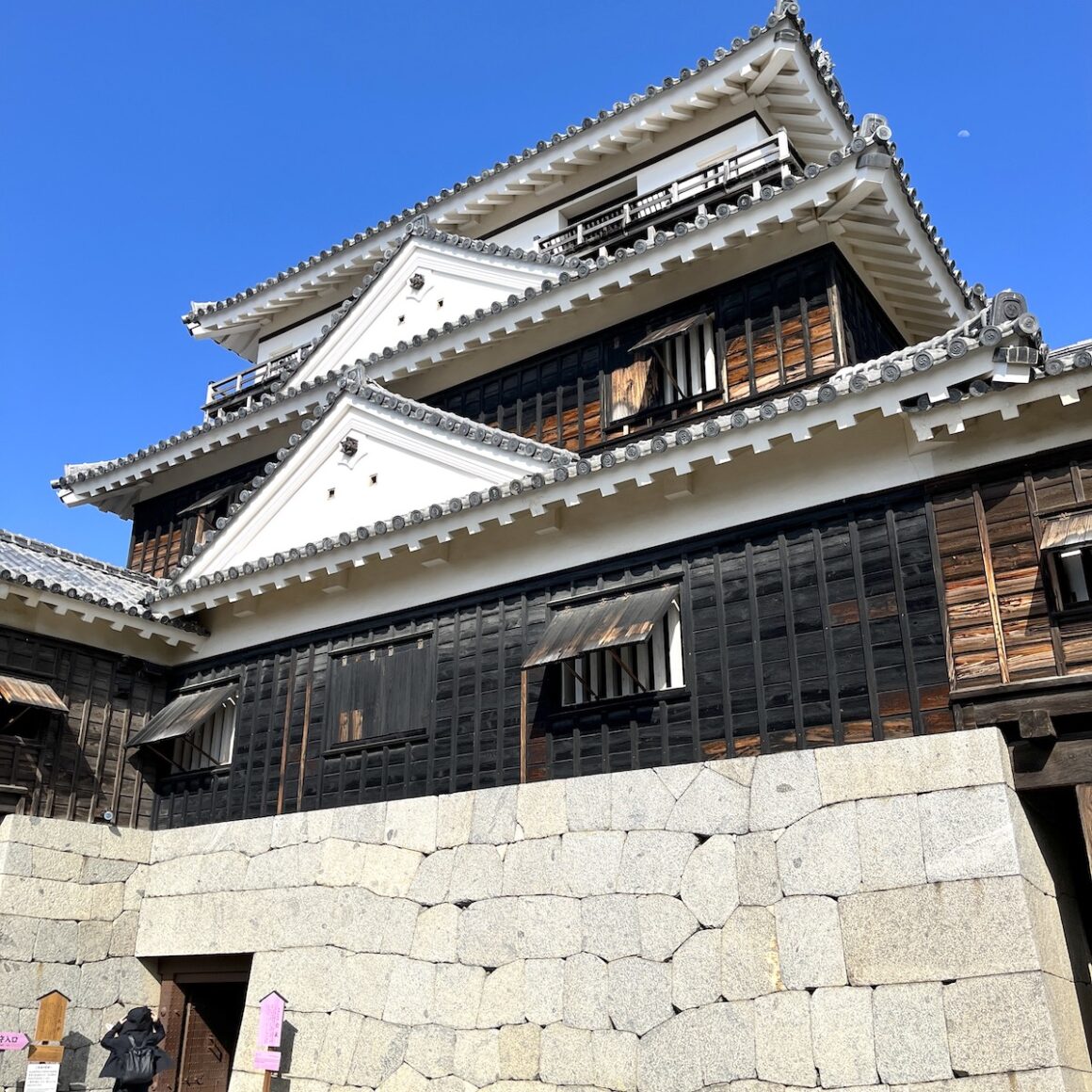
11. Shikoku Island: Magnificent Castle and Onsen Legend
Gleaming in the sun, Matsuyama Castle watches over a city of 500,000. Matsuyama-jo, built between 1602 and 1628, is a jewel of 17th-century feudal architecture and one of only twelve original castles in Japan to survive the end of the feudal era and wartime destruction intact: a true hidden gem in Japan for all who like historic japanese castles.
From the top, you get panoramic views over the city and far across the Seto Inland Sea. In spring, 200 cherry trees in the castle park draw crowds for Sakura season. Ropeway or chairlift will take you up the castle hill.
Two kilometers to the northeast, just a ten-minute ride on the retro “Botchan” tram, lies Dogo Onsen, Japan’s oldest hot spring. The wooden building, rich with elaborate carvings, dates back to 1894 and still operates as a bathhouse. It famously inspired the spirits’ bathhouse in Hayao Miyazaki’s Oscar-winning anime masterpiece, Spirited Away.
Approx. 350 km from Osaka

12. Kyushu: Rugged Coasts and Corals
Rugged volcanic coastlines define the Cape Hyuga peninsula on Kyushu, one of the most beautiful hidden gems in Japan. From the Skeluccha View Deck and the Cape Hyuga Observation Deck, perched on a narrow ridge, you can take in wild coastal scenery with deeply carved “fjords,” all set to the deafening song of cicadas.
The waters off Nobeoka and around the offshore island of Shimanoura are prime diving and snorkeling territory. In the crystal-clear water, lucky divers might spot eagle rays, thresher and hammerhead sharks, sunfish, dolphins, and manta rays. Hundreds of hard coral species form massive reefs, like the one at Nozakanohama. Guided snorkeling tours out of Nobeoka start at around 85 euros.
Further south, lush, steamy greenery blankets the Nichinan Coast. Udo-jingu Shrine sits spectacularly against the ocean, with its countless bright red torii gates. Past fantastic surf beaches like Koigaura, Route 448 climbs toward Cape Toi, where wild horses roam the grassy hills. Legend says they descend from samurai steeds.
220 to 330 km from Fukuoka

13. Yanaka & Nezu: Where Tokyo Feels Like a Village
Ten kilometers as the crow flies, and entire worlds apart: that’s the distance between the neon canyons of Shibuya Crossing and Tokyo’s rural “low city.” Locals call neighborhoods like Yanaka „Shitamachi“: narrow alleys, small artisan workshops, and lean-to wooden houses.
In neighboring Nezu, the crimson torii gates of Otome Inari Shrine stand beside Nezu Shrine, founded 1,900 years ago. Other highlights include the winding Snake Road and the SCAI the Bathhouse art gallery, housed in a former public bathhouse.
Want something even more personal? The “Borderless Visit” program lets travelers visit Tokyo families at home to cook and share a meal. Language barriers are minor, and the glimpse into daily life is priceless. The cost is around 30 euros per person (5,500 yen).
Our hosts, Tadashi and Mayumi Takayanagi, work in software and live in a stylish designer tiny house in a narrow alley in Oshiage, close to the Skytree. They treat us to generous servings of sashimi, mizuna-tofu salad, miso soup, and rice balls. We eat with the Skytree in view, seated at a traditional horigotatsu table, where you sit on the floor with your feet resting in a sunken pit underneath. You can’t get closer to authentic local life than this.
👉 Read my Tokyo Bucket List with 22 Insider Tips
👉 Read about Japan’s spooky Ghost Island, Hashima off the coast of Nagasaki
👉 Japan Car Rental FAQ: 40 answers covering costs, licenses, tolls, traffic rules & navigation for a safe and relaxed Japanese road trip